SaysockRFQ
Korean custom socks manufacturingProduction-ready RFQ programs for importers, distributors, and retail-ready buyers
Buyer-ready production reviewRequest quote

OEM landing

OEM socks manufacturer for buyer-led export programs.

Buyers searching for an OEM socks manufacturer usually have a product direction already and need a controlled path from brief and sample review to QC, pack-out, and shipment planning.

What should an OEM socks manufacturer handle?

An OEM socks manufacturer should translate a buyer-owned sock specification into a controlled sample-to-bulk path. For B2B programs, that means product family, material, artwork, packaging, QC, pack-out, destination, documentation, and approval owners are reviewed together before production release.
Signal 01OEM production support for buyer-defined programs
Signal 02Sample, QC, packaging, and shipment gates kept visible
Signal 03Built for retail, distributor, merch, gifting, and private-label buyers
OEM review pathOEM work starts with the buyer brief, then tightens toward production release
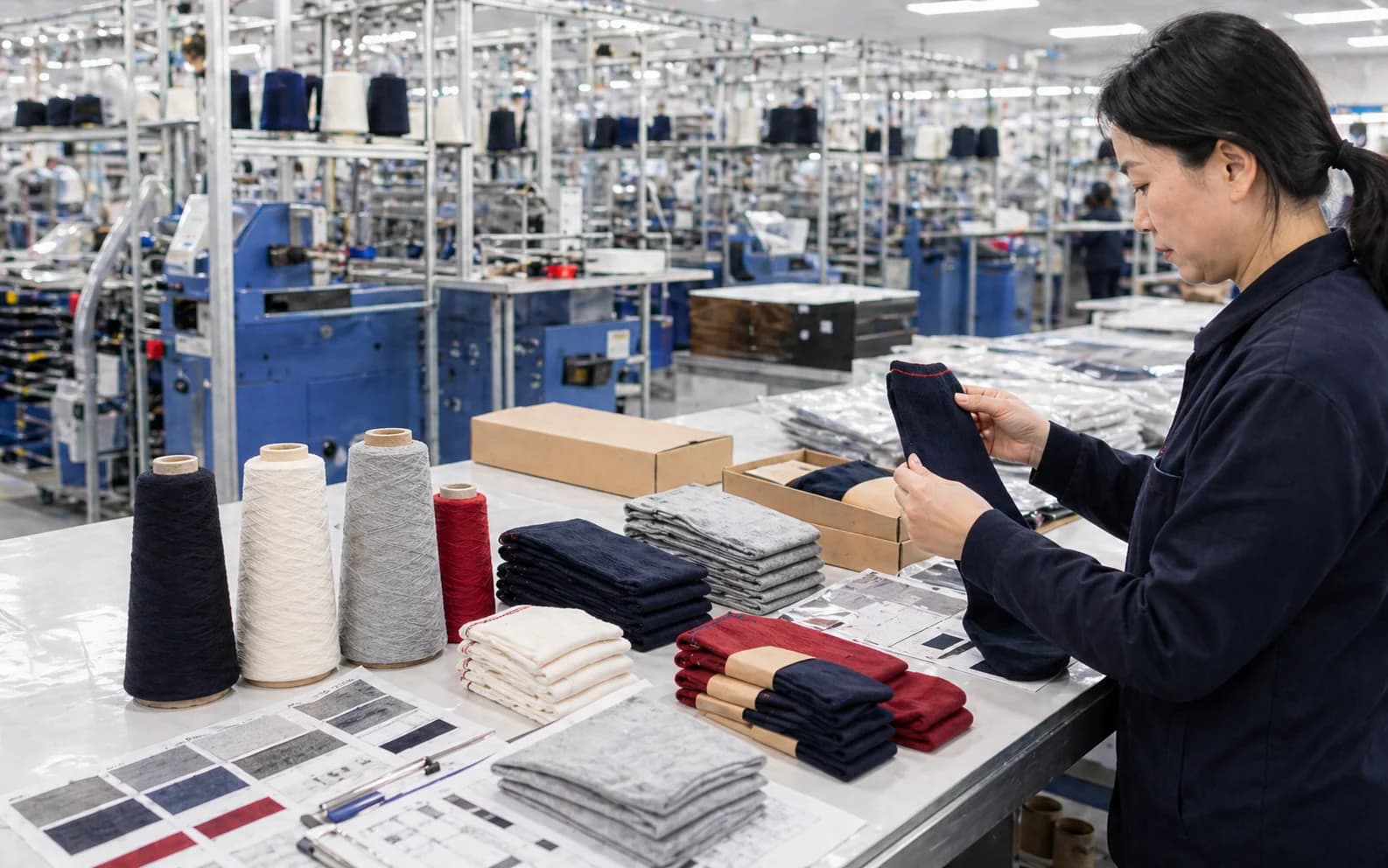
OEM production review board with sock samples, yarn cones, swatches, and packaging scope

The strongest OEM path keeps product specs, materials, packaging, and destination assumptions in one review board before bulk production.

Ask for a production review before every detail is final.

A useful first inquiry does not need a finished tech pack. If the buyer can state the product type, quantity band, target market, timing pressure, and packaging direction, SaySock can start the production review and narrow the missing points.

  • Use a rough quantity band instead of waiting for a final PO.
  • Name the channel: retail, private label, gifting, promo, or wholesale.
  • Say whether packaging is bulk-clean, wrapped, tagged, boxed, or still open.

Fast RFQ path

Move from comparison to a production review in one step.

Send the available commercial frame now. Artwork files, final carton logic, and program-specific documentation can follow when they affect the first reply.

Use this route when the buyer can explain the program shape, even if the pack is unfinished.

SaySock should not read as enterprise-only. A first serious run, private-label or OEM brief, distributor repeat path, promotional campaign, or larger repeat program can all start when the commercial frame is visible.

  • First serious runs are valid when product, quantity band, market, timing, and destination are clear.
  • Repeat and bulk context helps when SKU count, carton logic, or documentation pressure may affect the reply.
  • Promotional and gifting programs should name audience, deadline, packaging level, and delivery context.

What does not need to be final

Rough commercial frame is enough for the first production review.

Files are optional at first. Final artwork, exact carton counts, label copy, and documentation packets can follow when they clarify the review. The RFQ should separate confirmed inputs from open questions instead of waiting for a perfect tech pack.

Send rough commercial frame

Program board

Lock the channel, quantity band, and packaging shape before the first quote.

OEM socks manufacturing support for B2B buyers that need a controlled path from product brief and sample review to QC, pack-out, and shipment planning.

OEM fitOEM briefApproval gatesDepth passNot OEM
Send this program for review
Stage 01

Use OEM when the buyer owns the product direction and needs controlled execution.

OEM is strongest when the buyer has a target product, channel, quantity range, and approval path in mind, but needs manufacturing input to make it workable.

Stage 02

The first OEM brief should reduce guesswork, not create a specification maze.

A useful OEM inquiry gives enough information for the factory to challenge assumptions, suggest a sample path, and flag missing production inputs.

Stage 03

OEM production should move through gates, not vague progress updates.

The buyer should understand what each stage is meant to decide before bulk starts: product direction, sample approval, packaging release, QC review, and shipment handoff.

OEM custom sock route

Use OEM custom socks when the buyer owns a fuller product scope and needs controlled execution through sample, pack, QC, and shipment.

  • Decide whether the work is buyer-defined OEM, simpler custom logo, private label, or wholesale repeat production.
  • Bring product spec, sample target, material direction, packaging scope, quantity band, destination, and approval owner into the OEM RFQ.
  • Keep product family, channel, material, packaging, sample path, destination, and RFQ evidence inside the same production inquiry.

Program fit

Use this as a reviewable custom sock program, not a loose catalog choice.

SaySock keeps each commercial program tied to buyer intent, pack-out pressure, sampling assumptions, destination context, and the evidence needed for a useful first production reply.

Send program evidence

What this helps you state in an RFQ

OEM sock manufacturing support for buyer-led product, packaging, QC, pack-out, and shipment planning.

  • State this as a operating-model request before pricing is discussed.
  • Use the buyer boundary: buyer-led product program.
  • Separate this request from adjacent product paths such as Compare Korea manufacturing support, Review private-label packaging systems, Use quote prep before OEM review.

RFQ boundary

Keep the first production reply specific.

Keep this page focused on buyer-led product program, so the RFQ does not blur into nearby product, channel, or operating-model questions.

Next move

Bring the clearer statement into the RFQ.

Bring buyer-led product program, quantity band, packaging expectation, target channel, and deadline into the RFQ.

Program fit check

buyer-led product program

OEM sock manufacturing support for buyer-led product, packaging, QC, pack-out, and shipment planning.

operating-model

Use quote prep before OEM review

A controlled OEM path needs buyer role, market, quantity, timing, packaging, and destination.

Use quote prep before OEM review

OEM sock programs need buyer-owned specs and factory-side release gates.

OEM is strongest when the buyer brings a product direction and the manufacturer turns it into a controlled path through sample, QC, packaging, and shipment.

  • Buyer-defined products with specs, references, or assortment logic already forming
  • Retail, distributor, and private-label programs that need production gates
  • Teams that need controlled execution rather than a consumer customizer

Production lens

Make the program specific before the first quote gets too broad.

Separate must-holds from preferences

OEM review moves faster when the factory can see which construction, color, packaging, and compliance points are fixed.

Use gates to reduce ambiguity

Brief, sample, pre-production approval, QC, and shipment should each decide something specific.

Keep packaging inside OEM scope

Packaging and labeling often affect sampling, approval, and carton logic, so they should not be bolted on late.

Tradeoff

Control vs. flexibility

OEM gives the buyer more control, but the first brief has to name what is fixed so the factory can protect the release path.

RFQ evidence

Send the inputs that make this program ready for a production reply.

  • Product spec or reference sample direction
  • Must-hold requirements vs. flexible preferences
  • Quantity, variation count, and target market
  • Packaging, labeling, documentation, and destination needs
Send program evidence in the RFQ

OEM fit

Use OEM when the buyer owns the product direction and needs controlled execution.

OEM is strongest when the buyer has a target product, channel, quantity range, and approval path in mind, but needs manufacturing input to make it workable.

OEM fit

Buyer-defined product programs

Good fit when the buyer has references, artwork, or assortment logic and needs a factory-side path to sample and production.

OEM fit

Distributor and importer programs

Useful when the same commercial logic may need to repeat across markets, cartons, or replenishment windows.

OEM fit

Private label and retail launches

Strong when the OEM scope includes packaging, labeling, and documentation context rather than the sock alone.

OEM brief

The first OEM brief should reduce guesswork, not create a specification maze.

A useful OEM inquiry gives enough information for the factory to challenge assumptions, suggest a sample path, and flag missing production inputs.

  • Define product family, length, target use, and market
  • Share quantity band, variation count, and launch timing
  • Clarify artwork status, packaging expectation, and destination
  • List documentation or buyer compliance requests as program context
  • Separate must-hold requirements from ideas that can still change

Approval gates

OEM production should move through gates, not vague progress updates.

The buyer should understand what each stage is meant to decide before bulk starts: product direction, sample approval, packaging release, QC review, and shipment handoff.

Approval gates

Brief gate

Confirms buyer role, product family, quantity, target market, timing, and commercial constraints.

Approval gates

Sample gate

Confirms product direction, artwork translation, material feel, and any packaging assumptions that affect release.

Approval gates

Shipment gate

Keeps carton logic, destination, labeling, documentation, and timing visible before the handoff becomes urgent.

Depth pass

Show where the buyer owns the spec and where the factory tightens it.

The buyer objection is usually that OEM sounds vague or too broad. This route should separate buyer-owned decisions from factory-side tightening so the scope does not become endless customization.

Depth pass

Buyer objection: OEM could mean unlimited custom work

The page should explain that OEM is controlled execution around a buyer-defined product, not an open-ended invention process.

Depth pass

Decision trigger: the buyer has a spec that needs production discipline

Use this route when product references, artwork, packaging, market, and destination already exist but need a controlled sample-to-bulk path.

Depth pass

RFQ readiness: separate must-hold specs from flexible ideas

The first reply needs product family, must-hold details, changeable ideas, quantity band, packaging scope, destination, and approval owner.

Not OEM

Not every custom sock request is an OEM program.

If the buyer mainly wants a fast branded giveaway, a custom logo or promotional route may be simpler. OEM should be reserved for programs where the buyer-defined product system needs production control.

  • Not ideal for personal one-off customization
  • Not ideal when the product direction is still entirely open
  • Not ideal when the request is only a logo upload with no quantity, market, packaging, or timing context

Frequently asked questions

Clear the keyword-level objections before the buyer leaves the page.

What is the difference between OEM socks and custom logo socks?

Custom logo socks can be a simpler logo-led program. OEM usually means the buyer is defining a fuller product scope, including construction, material, packaging, destination, and approval requirements.

Can OEM include packaging and labeling?

Yes. For B2B programs, packaging and labeling should be scoped early because they affect sampling, approval, carton logic, and shipment readiness.

What makes an OEM inquiry ready for review?

A ready OEM inquiry includes buyer role, target market, product family, quantity band, timing, artwork status, packaging need, destination, and any documentation requirements.

Need a concrete next step?

Send the quantity, channel, and packaging need. We will narrow the build fast.

Send production RFQOpen related prep