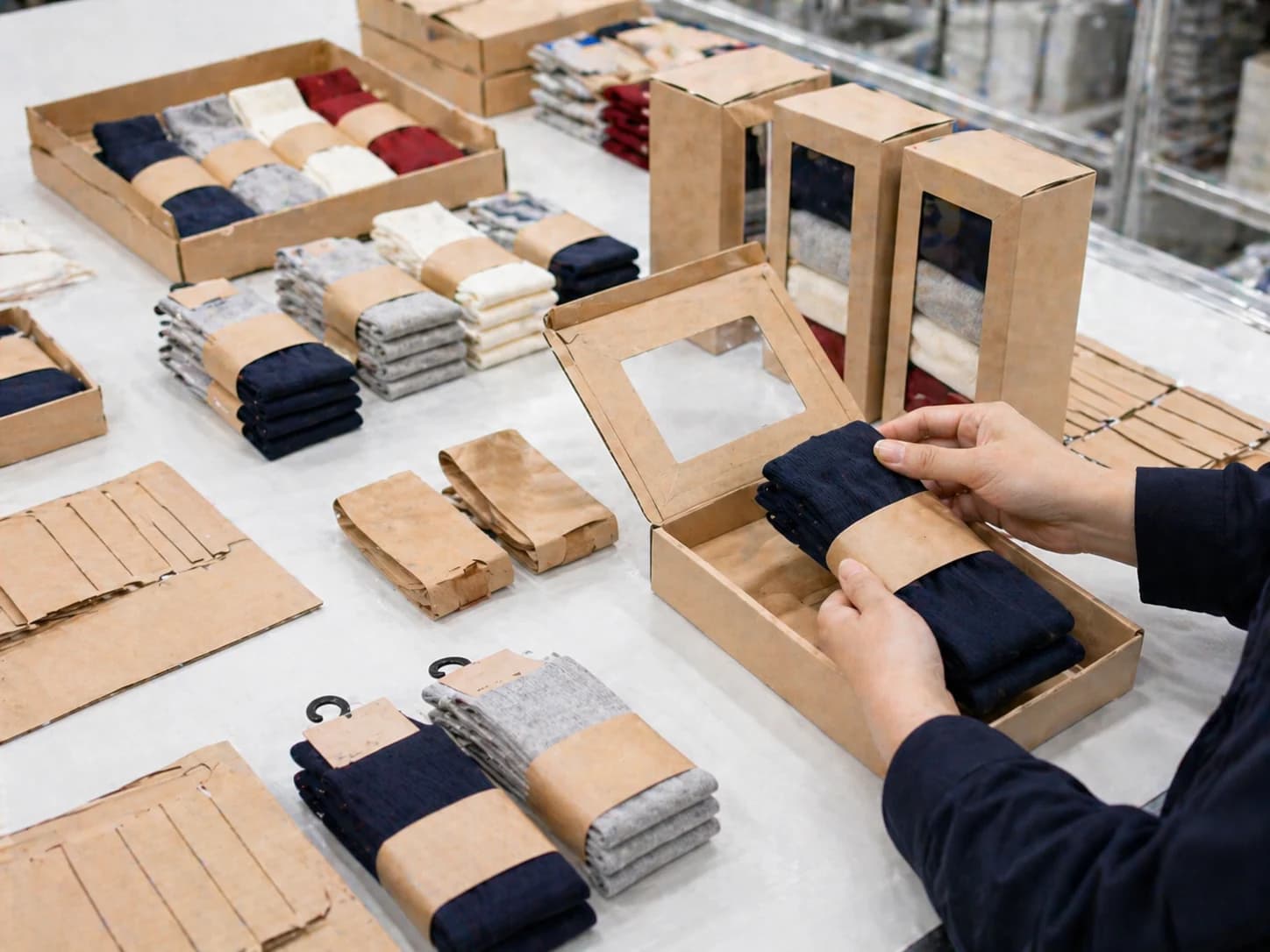
Sourcing guide
Sock packaging options: what to choose and when it matters.
Packaging is where many custom sock programs go from sample-ready to commercially stalled. Choosing the wrong presentation for the channel — or deciding too late — creates friction in production, approval, and shipping that the buyer did not expect.

Shelf-facing retail, internal merch drops, gifting kits, and promo giveaways all need different packaging logic. Deciding early saves the most time.
Program board
Lock the channel, quantity band, and packaging shape before the first quote.
Compare custom sock packaging options from poly-bags to gift boxes. Understand how packaging affects MOQ, cost, lead time, and buyer perception for retail, merch, and gifting programs.
Each packaging option carries different cost, complexity, and presentation signals.
Picking the right tier depends on the channel, the buyer's brand standards, and whether the packaging itself needs to sell the product.
When the packaging needs to carry as much weight as the product.
Gift-grade and premium retail packaging adds significant value to the unboxing experience but also raises MOQ, cost, and lead time.
Packaging decisions made late create the most production friction.
The cost of changing packaging after sampling is much higher than deciding during the brief. These guidelines help the buyer commit early.
Packaging is a product decision, not an afterthought.
The packaging tier communicates value, drives cost, affects MOQ, and determines how the product behaves on shelf, in a gift bag, or in a shipping carton.
- Buyers choosing between bulk, retail, and gift packaging for the first time
- Teams that need to match packaging investment to the actual sales channel
- Programs where packaging timing and cost discipline matter to the launch
Production lens
Make the route specific before the first quote gets too broad.
Start with the handoff context
Is the product going to a shelf, an event table, a mailbox, or a gift bag? The answer narrows packaging options immediately.
Budget packaging into unit economics early
Adding packaging after pricing creates friction. Including it from the brief makes quoting and sampling cleaner.
Default to sleeve wrap when uncertain
Sleeve wraps cover the widest range of commercial contexts and keep the buyer from over-committing before the market responds.
Presentation ambition vs. production timeline
Higher-end packaging adds perceived value but also adds design approval, sourcing, and assembly time that can shift the delivery schedule.
RFQ evidence
Send the inputs that prove this route is ready for a production reply.
- Sales channel: retail shelf, e-commerce, event, corporate gift, or internal
- Presentation tier: bulk, simple wrap, hang tag, gift box, or custom mailer
- Brand assets for packaging artwork
- Carton packing requirements and destination logistics
Packaging types
Each packaging option carries different cost, complexity, and presentation signals.
Picking the right tier depends on the channel, the buyer's brand standards, and whether the packaging itself needs to sell the product.
Poly-bag and header card
Simplest and most cost-effective. Good for bulk distribution, internal merch, event giveaways, and any context where the packaging is discarded immediately.
Sleeve wrap or belly band
A step up in presentation. Shows the product while adding brand identity. Works for light retail, boutique settings, and mid-tier gifting.
Hang tag and retail clip
Standard for retail floor and e-commerce listings. Allows shelf-facing display and communicates product details to the end buyer.
Elevated presentation
When the packaging needs to carry as much weight as the product.
Gift-grade and premium retail packaging adds significant value to the unboxing experience but also raises MOQ, cost, and lead time.
Gift box
Best for premium gifting, corporate programs, and occasions where the packaging is part of the perceived value. Adds the most to unit cost and minimum order.
Custom carton or mailer
For e-commerce brands that want the packaging to reinforce the brand from delivery to unboxing. Requires more lead time for structural design.
Bundle or kit packaging
Multi-pair sets with coordinated presentation. Common for subscription boxes, seasonal collections, and retail value packs.
Decision timing
Packaging decisions made late create the most production friction.
The cost of changing packaging after sampling is much higher than deciding during the brief. These guidelines help the buyer commit early.
- Decide packaging tier before requesting samples — it affects the sample itself
- Match packaging to the actual sales context: shelf, event table, mailbox, gift bag
- Factor packaging cost into unit economics early, not after production pricing
- Consider carton packing requirements: how the packaging fits into shipping cases
- If undecided, start with sleeve wrap — it covers most commercial contexts cleanly
Frequently asked questions
Clear the keyword-level objections before the buyer leaves the page.
Does packaging really affect the production timeline?
Yes. Complex packaging like gift boxes or custom mailers requires separate design approval, material sourcing, and assembly steps. Each adds time to the overall lead.
Can I upgrade packaging later without restarting the process?
Minor upgrades like adding a hang tag to a poly-bag order are usually straightforward. Major changes like switching to gift boxes may require new samples and adjusted pricing.
What packaging works best for a first-time order?
Sleeve wrap or belly band. It is affordable, visually clean, works across most channels, and does not over-commit the buyer to complex presentation before the market has responded.
Need a concrete next step?