Guide focus
Use this guide to tighten the first production reply.
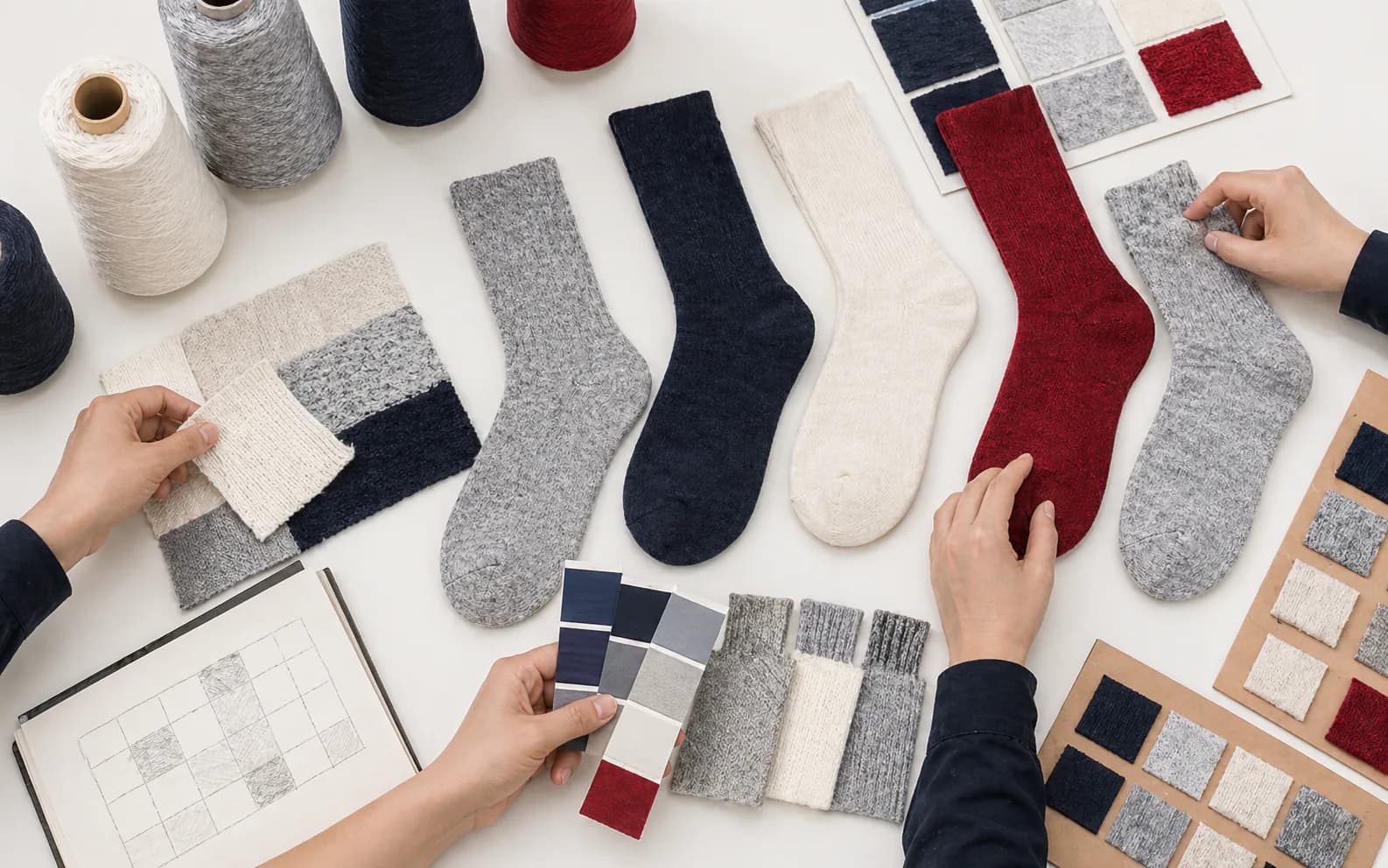
Color planning should support assortment clarity, logo legibility, and packaging fit. The goal is not maximum choice, but a palette that survives sampling and sell-through cleanly.
Plan the palette around the selling context
Three color questions shape most early decisions
Use color count to protect sampling speed
Plan the palette around the selling context
A broad retail assortment wants a different palette discipline from a one-shot promo bundle or a gift-ready private label launch. Color should support the channel before it tries to show personality.
That usually means starting with a stable base palette and then deciding where the accent color or logo contrast actually matters.
Three color questions shape most early decisions
Before the factory looks at exact yarn references, the buyer should already know whether the product needs to look quiet, premium, playful, or highly branded in the final channel.
- Is the sock part of a broader assortment or a single product push?
- Does the logo need high contrast or a more tonal placement?
- Will the packaging and product colors need to read as one family on shelf?
Use color count to protect sampling speed
The more colors the first order tries to carry, the harder it becomes to keep variation count, pack-out, and approvals clean. Buyers usually move faster when the first launch holds a tighter palette.