What this example resolves
Read the decision path before you write the brief.
An anonymized composite example showing how material direction, variation planning, and carton assumptions make repeatable wholesale, distributor, or merch programs easier to manage.
The buyer needed a system, not just a first drop
The core challenge was not whether one sock could be made. It was whether the first decision set could support later colorways, cleaner replenishment, and a repeatable packaging logic without reopening every question.
Material and variation discipline mattered early
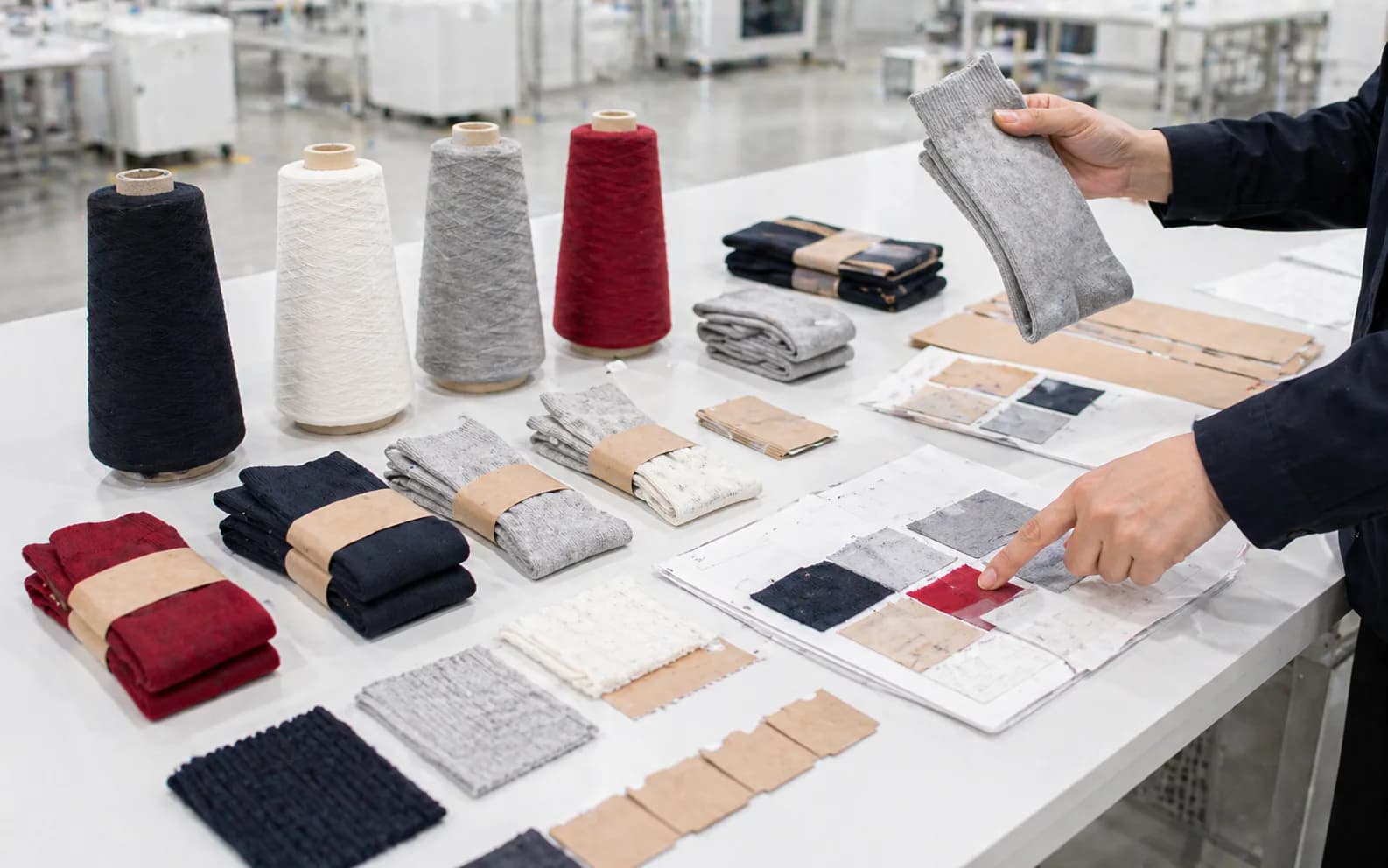
The product became easier to manage once the buyer stopped treating each colorway like a separate idea and instead chose a narrower material and presentation system that could repeat cleanly.
Why this kind of proof helps future buyers
Programs with repeat potential need more than a nice first sample. They need decisions that can survive replenishment, new colorways, and broader distribution. This example exists to make that logic visible before the brief is sent.
The buyer needed a system, not just a first drop
The core challenge was not whether one sock could be made. It was whether the first decision set could support later colorways, cleaner replenishment, and a repeatable packaging logic without reopening every question.
Material and variation discipline mattered early
The product became easier to manage once the buyer stopped treating each colorway like a separate idea and instead chose a narrower material and presentation system that could repeat cleanly.
- Use yarn and hand-feel language buyers can actually approve
- Keep variation count realistic for the first launch window
- Treat carton and grouping logic as part of assortment planning
Why this kind of proof helps future buyers
Programs with repeat potential need more than a nice first sample. They need decisions that can survive replenishment, new colorways, and broader distribution. This example exists to make that logic visible before the brief is sent.